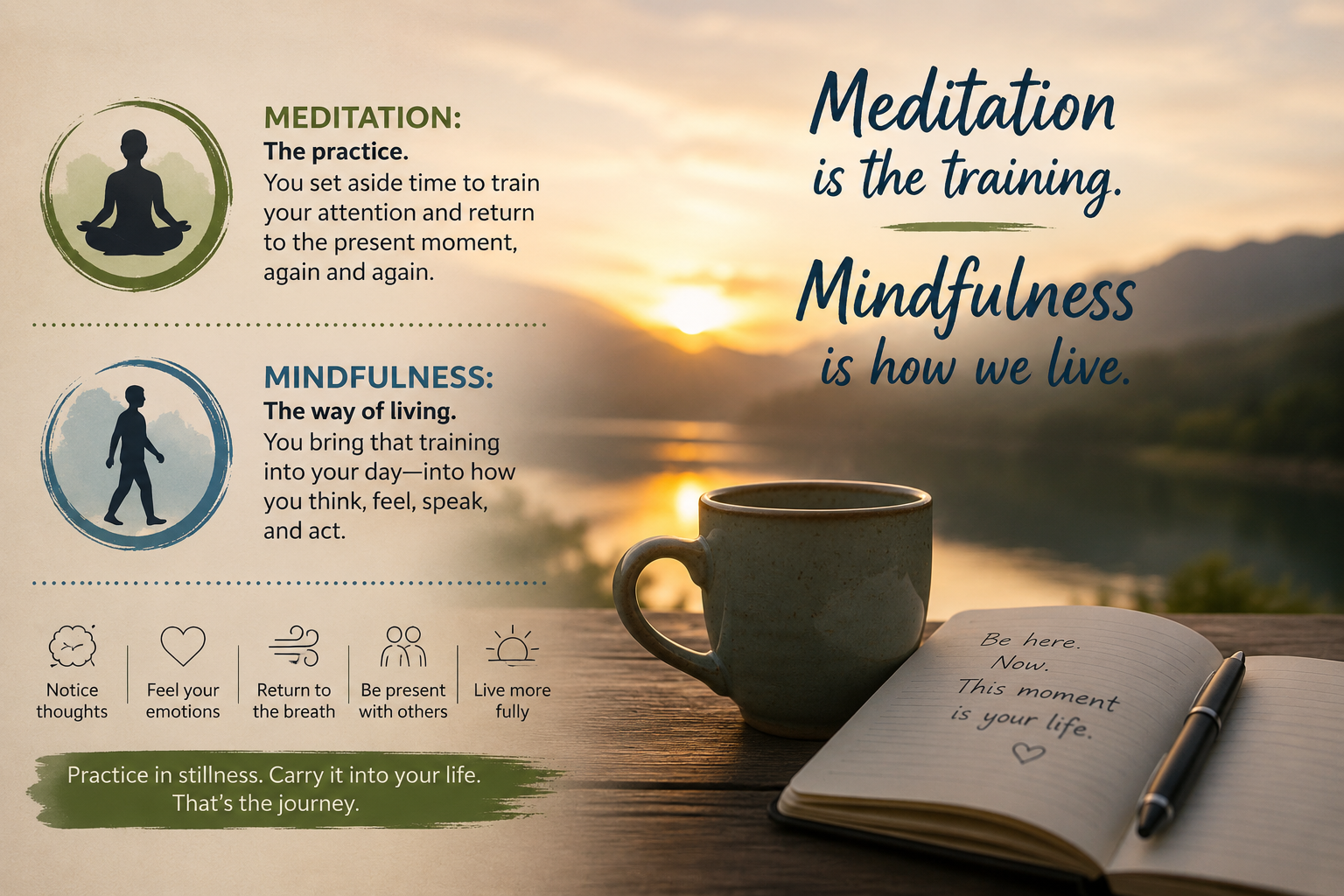
Meditation and existentialism can be practiced together by exploring their complementary approaches to understanding existence, meaning, and personal responsibility. Here is a framework for integrating them:
Shared Themes
- Awareness of Being: Existentialism emphasizes the raw experience of being alive, while meditation cultivates present-moment awareness. These can be paired to assist us to experience existence more directly.
- Confronting Anxiety and Freedom: Existentialist ideas about confronting existential anxiety and the freedom to create meaning can be linked with meditation practices that help observe and accept difficult emotions without judgment.
- Authenticity and Self-Inquiry: Existentialism calls for living authentically according to self-defined values. Meditation can offer practical tools for introspection, helping individuals uncover those values.
Identifying Common Ground
- Self-awareness: Existentialism encourages deep inquiry into one’s existence, while meditation develops mindfulness and awareness of one’s thoughts and emotions.
- Confronting the Absurd: Both practices can address existential questions about meaning, mortality, and purpose.
- Freedom and Responsibility: Existentialism focuses on taking ownership of one’s life. Meditation fosters clarity and calmness to face these responsibilities.
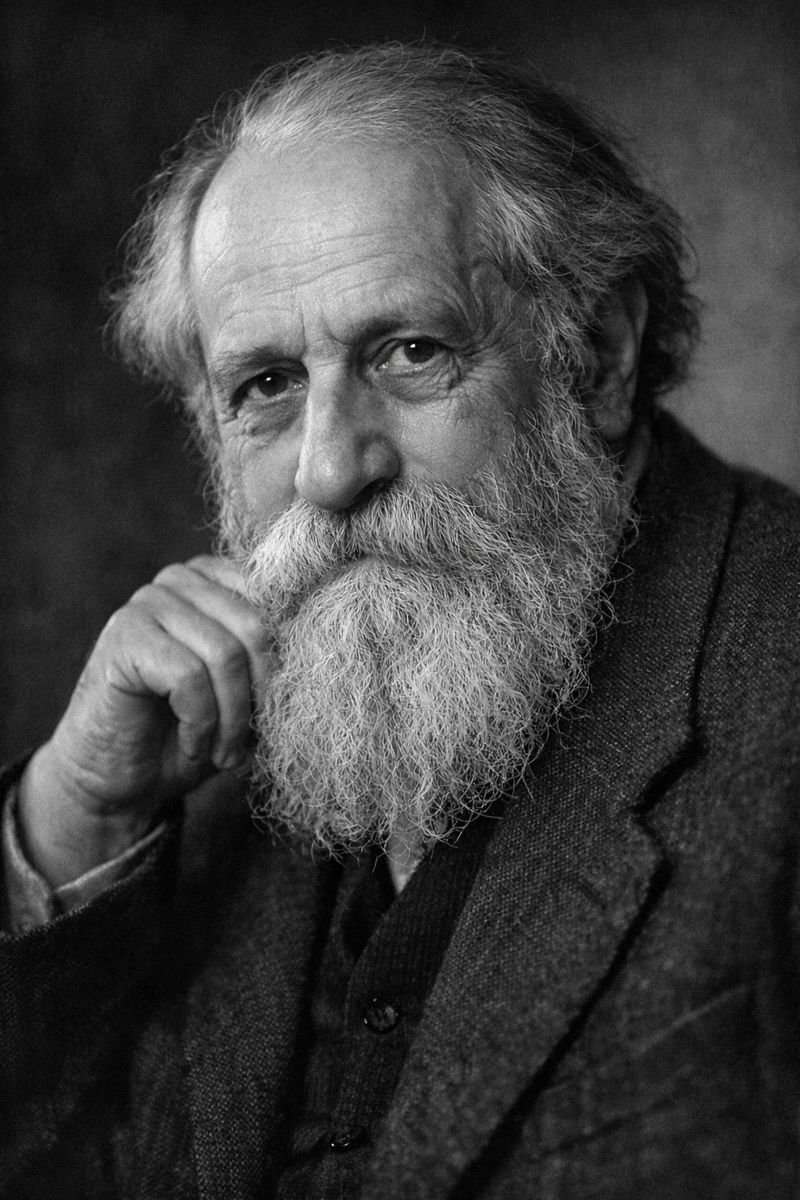
Martin Buber on Meditation
Martin Buber, best known for his philosophy of dialogue, particularly articulated in I and Thou (1923), did not explicitly write extensively on meditation in the sense of formalized meditative practices. However, his work provides a rich philosophical foundation for understanding meditation as a dialogical and relational practice. Here’s how Buber’s ideas can relate to meditation:
1. Meditation as Dialogue
- For Buber, the essence of human existence lies in relationships, particularly the I-Thou relationship, where one encounters the other (a person, nature, or even God) in a mode of openness and presence.
- Meditation can be seen as a way of cultivating the capacity for this kind of encounter, fostering a deep, present awareness that allows for authentic dialogue with oneself, others, or the divine.
2. Presence in the Moment
- Buber emphasizes the importance of presence in genuine encounters. Meditation practices that emphasize mindfulness or being fully present resonate with this focus on the immediacy of experience.
- Buber critiques overly introspective or detached forms of spirituality that neglect relationality. Thus, meditation inspired by Buber would focus on engaging with life and relationships rather than retreating from them.
3. Contemplative Prayer and the Divine
- Buber’s exploration of Hasidic spirituality offers insights into meditative practices. Hasidism values the encounter with God in the everyday and through prayer, which can be seen as a form of meditative dialogue.
- For Buber, meditation that fosters openness to the eternal Thou—a term he uses for God or ultimate reality—becomes a practice of deep relational connection.
4. Meditation as Relational Rather Than Solitary
- Buber warns against a purely self-centered pursuit of enlightenment or tranquility. Meditation, from his perspective, should not only be about self-realization but also about preparing oneself to engage more authentically with others.
- This aligns with meditative traditions that emphasize compassion and interconnectedness, such as loving-kindness meditation.
5. Critique of Mysticism
- Buber is critical of mysticism that seeks union by dissolving the self into the divine. Instead, he advocates for a relational spirituality where the self and the other remain distinct yet deeply connected.
- Meditation, in this light, would aim not to obliterate distinctions but to enhance awareness of the self-other dynamic, fostering genuine encounters.
Applying Buber’s Philosophy to Meditation Practices
- Interpersonal Meditation: Practices like relational mindfulness or meditative dialogues can align with Buber’s thought, focusing on attunement to others.
- Everyday Encounter as Meditation: Viewing everyday interactions as opportunities for meditative presence and dialogue.
- Hasidic Influence: Drawing on Hasidic prayer or contemplative practices to explore meditation as a relational encounter with the divine.
While Buber didn’t explicitly write about meditation, his philosophical framework offers profound insights into how meditative practices can be oriented toward relational depth, presence, and dialogue.