A thought appears:
I’m not good enough.
Something is going to go wrong.
They don’t like me.
I shouldn’t have said that.
What if this doesn’t work out?
And almost immediately, something interesting happens: we believe it.
We rarely stop and ask, Is this actually true? The thought appeared in our mind, so we assume it must be telling us something important about ourselves, another person, or the world.
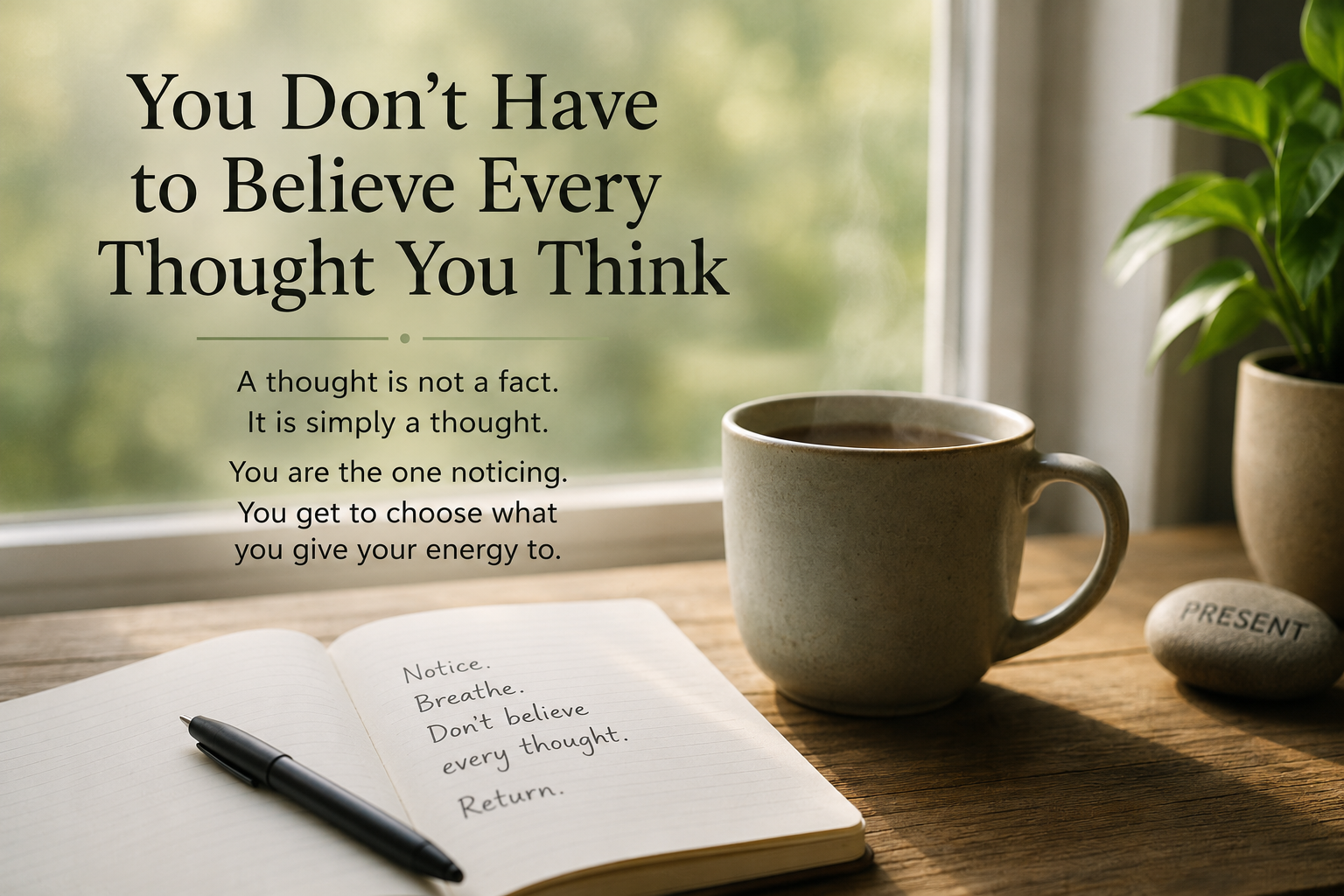
But a thought is not necessarily a fact.
It is simply a thought.
The Mind Is Always Producing Thoughts
Thinking isn’t a problem. It is what the mind does.
The mind remembers, predicts, compares, plans, judges, imagines, worries, and rehearses. Much of this is enormously useful. We couldn’t function very well without it.
But the mind doesn’t only produce accurate thoughts.
It also produces guesses.
It produces old memories.
It produces fears about things that haven’t happened.
It produces judgments based on incomplete information.
Sometimes it even produces complete nonsense.
And yet we can become so caught up in our thinking that we forget there is a difference between what we are thinking and what is actually happening.
Suppose you send someone a message and don’t receive a reply.
The fact is simple:
They haven’t replied yet.
But watch what the mind can do with that fact.
They’re ignoring me.
I must have offended them.
They’re angry with me.
I shouldn’t have sent that message.
Before long, we may be emotionally reacting to a story that exists entirely within our own mind.
Perhaps the person was simply busy.
Meditation Helps Us See the Difference
This is one reason meditation can be so valuable.
When we sit quietly and pay attention to our breathing, thoughts inevitably appear.
At first, we may get carried away by them.
We remember something that happened yesterday. Then we’re replaying a conversation. That leads to another thought, which leads to another, and suddenly we’ve spent several minutes inside a movie created by our own mind.
Then something happens.
We notice.
Oh. I’ve been thinking.
And we return to the breath.
That little moment is more important than it might seem.
For perhaps the first time, we aren’t completely inside the thought.
We’re observing it.
The thought is still there, but our relationship to it has changed.
You Are the One Noticing
Try something right now.
Notice whatever thought happens to be present.
Don’t try to get rid of it.
Don’t analyze it.
Simply notice:
There is a thought.
Maybe it’s about this article. Maybe you’re thinking about something you need to do later. Perhaps you’re wondering whether you’re doing this correctly.
Whatever it is, notice something important:
You can observe the thought.
That means you don’t have to automatically follow it.
You don’t have to argue with it, either.
You can simply let it be there.
This creates a little space between having a thought and believing a thought.
And within that space is freedom.
We Don’t Need to Stop Thinking
Meditation is sometimes presented as though the goal were to empty the mind.
That’s not what we’re trying to do.
If you sit down to meditate and discover that you’re thinking, you haven’t failed at meditation.
You’ve discovered what minds do.
The practice is learning to recognize thinking without automatically becoming lost in it.
Thought arises.
We notice.
We return.
Another thought arises.
We notice.
We return again.
Each return strengthens our ability to recognize thoughts without immediately being controlled by them.
Eventually, that ability begins to follow us into everyday life.
Someone says something irritating.
Instead of immediately reacting, we notice:
I’m getting angry.
We’re worried about tomorrow.
We notice:
My mind is imagining what might happen.
We make a mistake.
The mind says:
I’m such an idiot.
And perhaps we recognize:
That’s a thought—not a verdict.
Some Thoughts Deserve Our Attention
None of this means thoughts are unimportant.
Some thoughts contain valuable information.
Some alert us to genuine problems.
Some lead to creative ideas, wise decisions, and necessary action.
The point isn’t to distrust every thought.
It is to stop giving every thought automatic authority.
We can learn to ask:
Is this true?
Do I actually know this?
Is this useful?
Do I need to act on this thought right now?
Sometimes the answer will be yes.
Sometimes we’ll discover that the mind is simply doing what minds do—producing another thought.
And we can let it pass.
Try This: A Three-Minute Practice
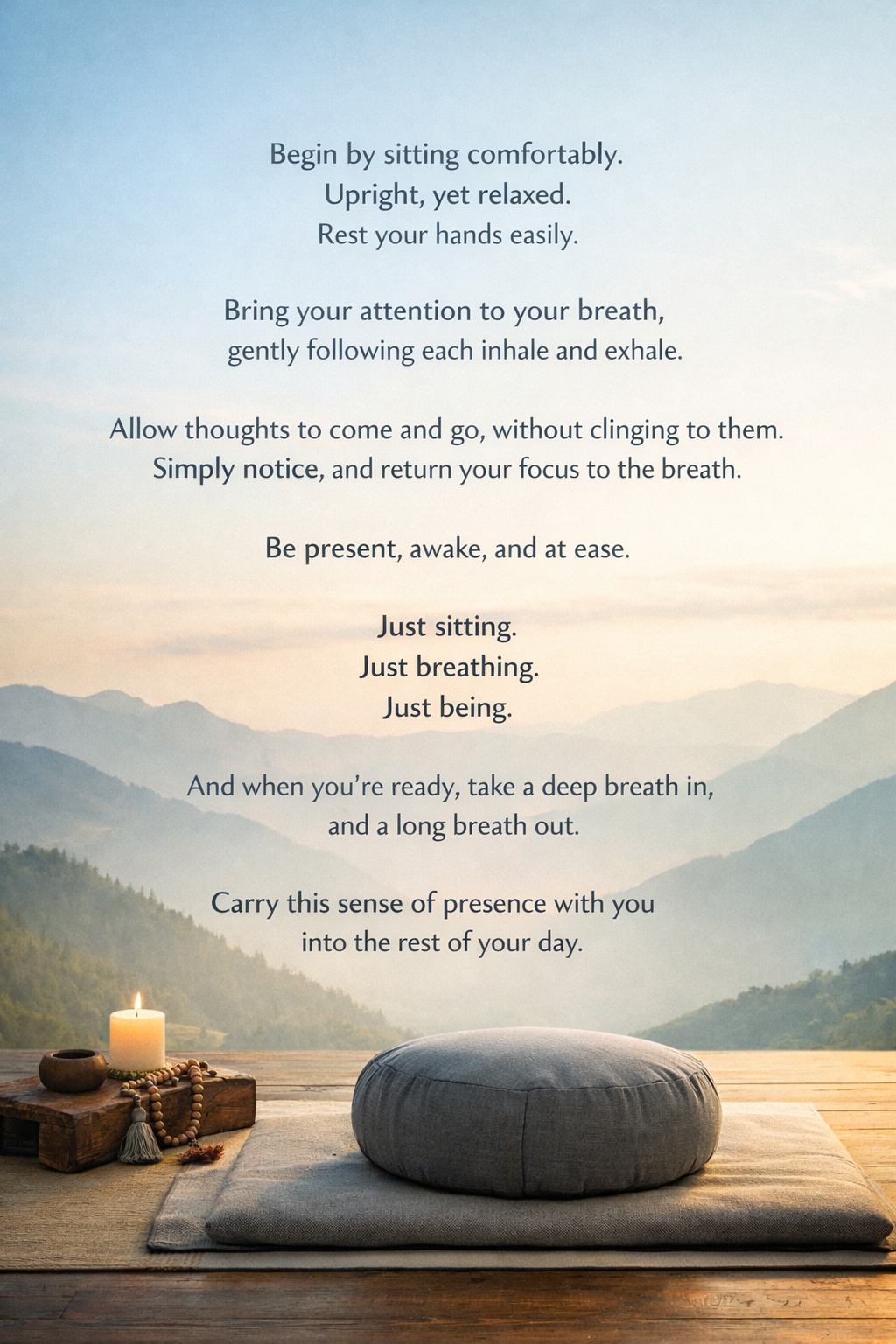
Sit comfortably.
Let your hands rest naturally and allow your body to relax.
Take a moment to notice your breathing.
There is no need to breathe deeply or control the breath. Simply feel yourself breathing.
Sooner or later, a thought will appear.
When you notice it, don’t fight it.
Silently acknowledge:
Thinking.
Then gently return your attention to breathing.
Another thought will come.
Notice it.
Return.
For three minutes, practice this simple movement:
Breathing.
Thinking.
Noticing.
Returning.
That’s the practice.
A Different Relationship With the Mind
We cannot control every thought that appears.
And perhaps we don’t need to.
What we can learn is how to relate to our thoughts differently.
We can listen without automatically agreeing.
We can notice fear without immediately assuming danger.
We can experience anger without instantly acting from it.
We can remember the past without having to live there.
And we can think about the future without pretending that our predictions are facts.
Meditation doesn’t ask us to stop thinking.
It teaches us something much more useful:
A thought can be present without running our life.
So the next time your mind tells you something frightening, critical, or discouraging, you don’t necessarily have to fight it.
Just notice it.
Take a breath.
And remember:
You don’t have to believe every thought you think.