The major tenets of Zen can be distilled into a few core principles that guide both understanding and practice. Though Zen has deep roots and many subtle teachings, its essence is often expressed through simplicity and direct experience. Here are the central tenets:
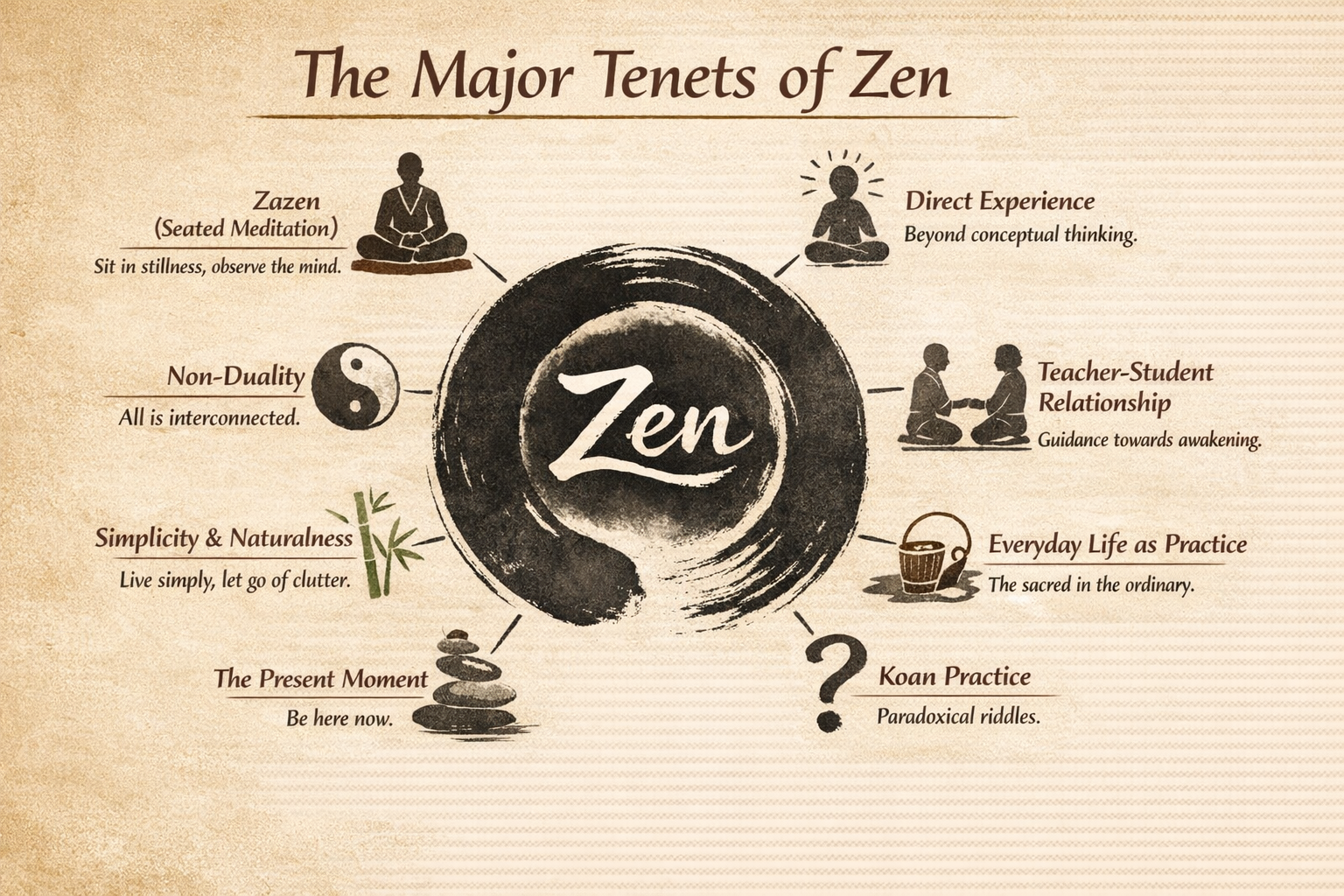
Zazen (Seated Meditation)
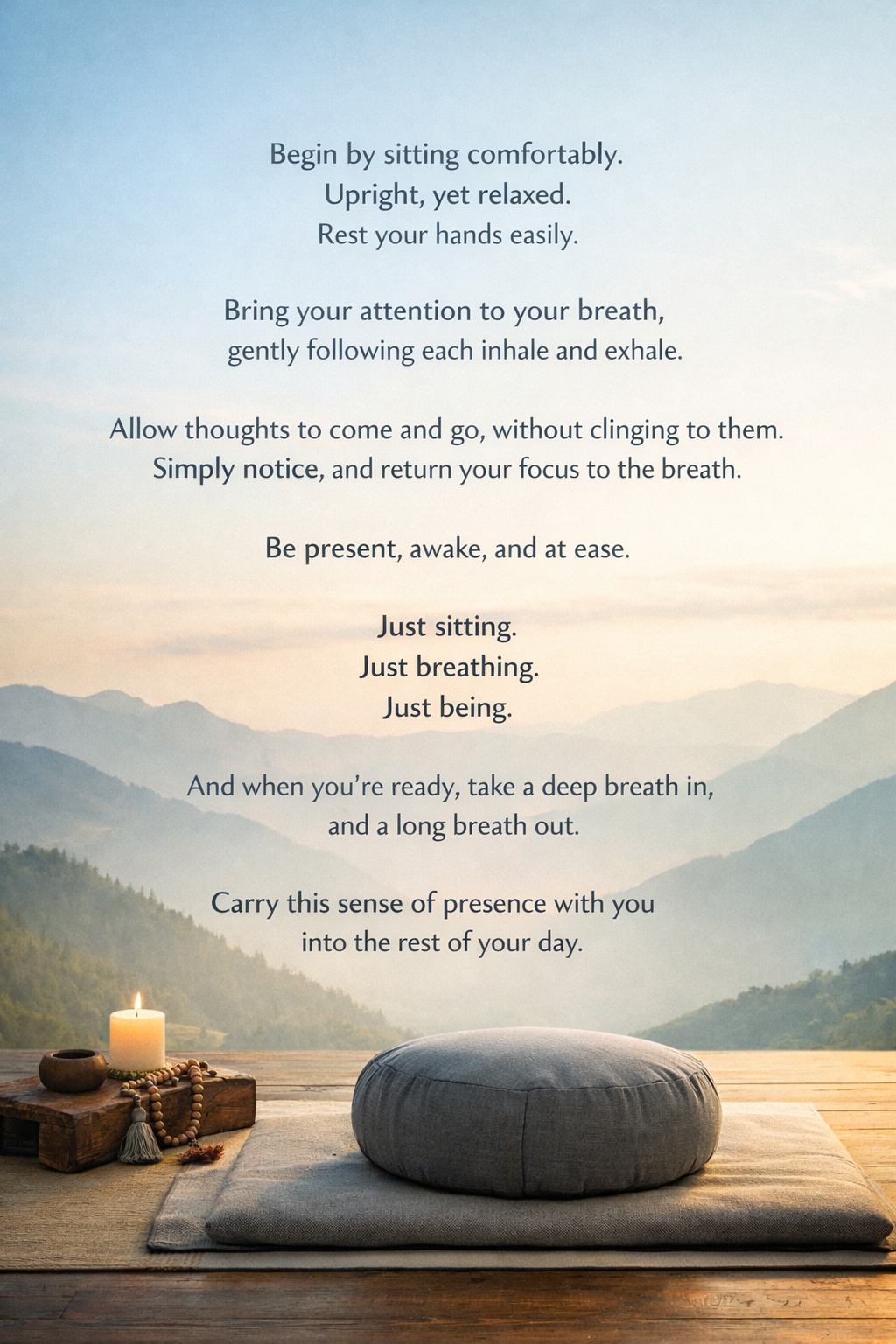
At the heart of Zen is the practice of zazen, or sitting meditation. It’s not about achieving a special state, but about directly experiencing the present moment, observing thoughts without attachment, and settling into the stillness of mind.
“Zazen is not a means to an end. It is both the means and the end.” – Dōgen
Direct Experience Over Intellectual Understanding
Zen emphasizes direct experience (often called kensho or satori when awakening occurs) rather than reliance on scriptures or conceptual thinking. It’s about knowing with the whole body, not just with the intellect.
Non-Duality
Zen teaches that the distinction between subject and object, self and other, is ultimately illusory. Everything is interconnected and arises interdependently. Realizing this is part of waking up to reality.
Simplicity and Naturalness
Zen values simplicity in life, thought, and action. It encourages living in harmony with nature, being present, and letting go of unnecessary attachments and complications.
The Here and Now
“Be here now” could be a Zen slogan. Zen trains the practitioner to fully inhabit each moment—whether eating, walking, or washing dishes. Enlightenment isn’t “out there” or in the future. It’s right here.
Everyday Life as Practice
Zen sees ordinary life as the path. There’s no division between spiritual practice and daily life—chopping wood and carrying water are as sacred as formal meditation.